Tools that turn fragmented private markets data into usable investor intelligence

AltF2 deploys AI-powered tools inside your environment and integrates them into your existing ecosystem through ETLs, APIs, CRM extensions, reports, dashboards, and workflows.

Each engagement includes support hours for implementation, tuning, data cleanup, pipeline design, analysis, reporting, validation, and broader data consulting.
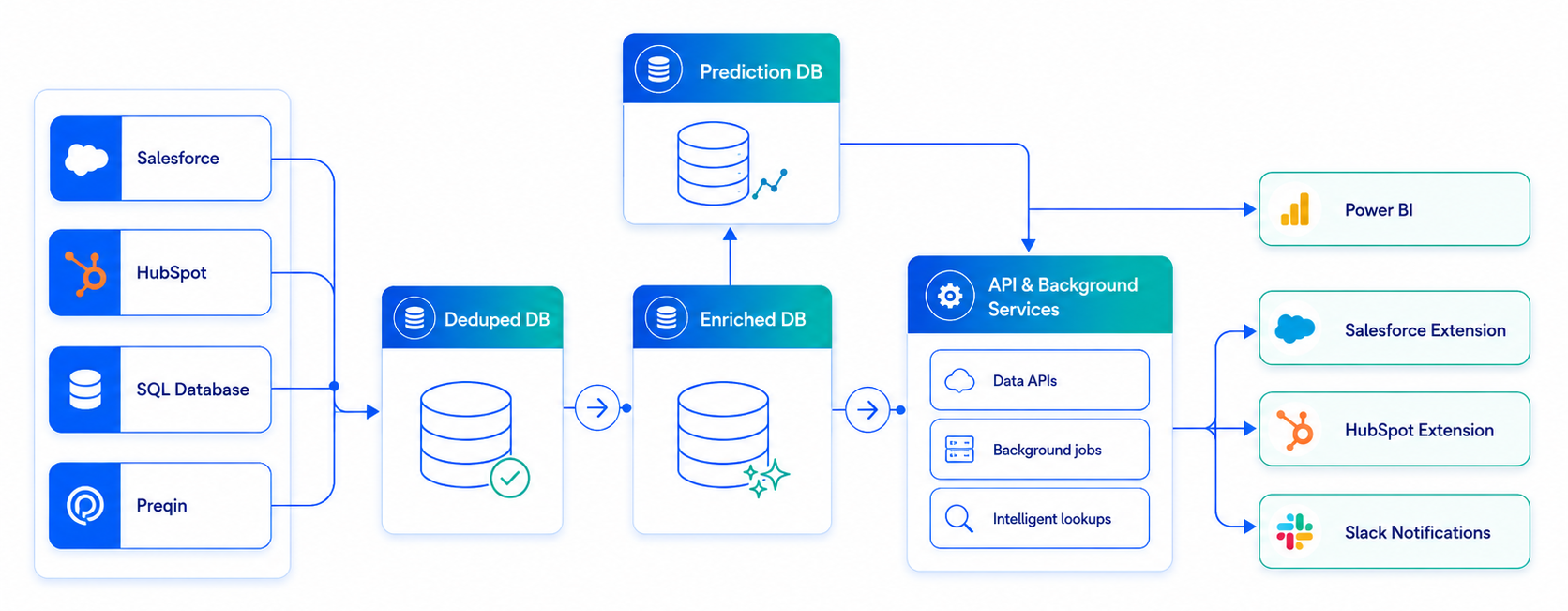
Platform workflow across source systems, models, and delivery channels

From fragmented investor and fund data to usable intelligence inside the systems your team already uses.
1. Connect fragmented investor records

Investor data often sits across CRM records, third-party datasets, spreadsheets, internal systems, commitments, fundraising history, and interaction notes.

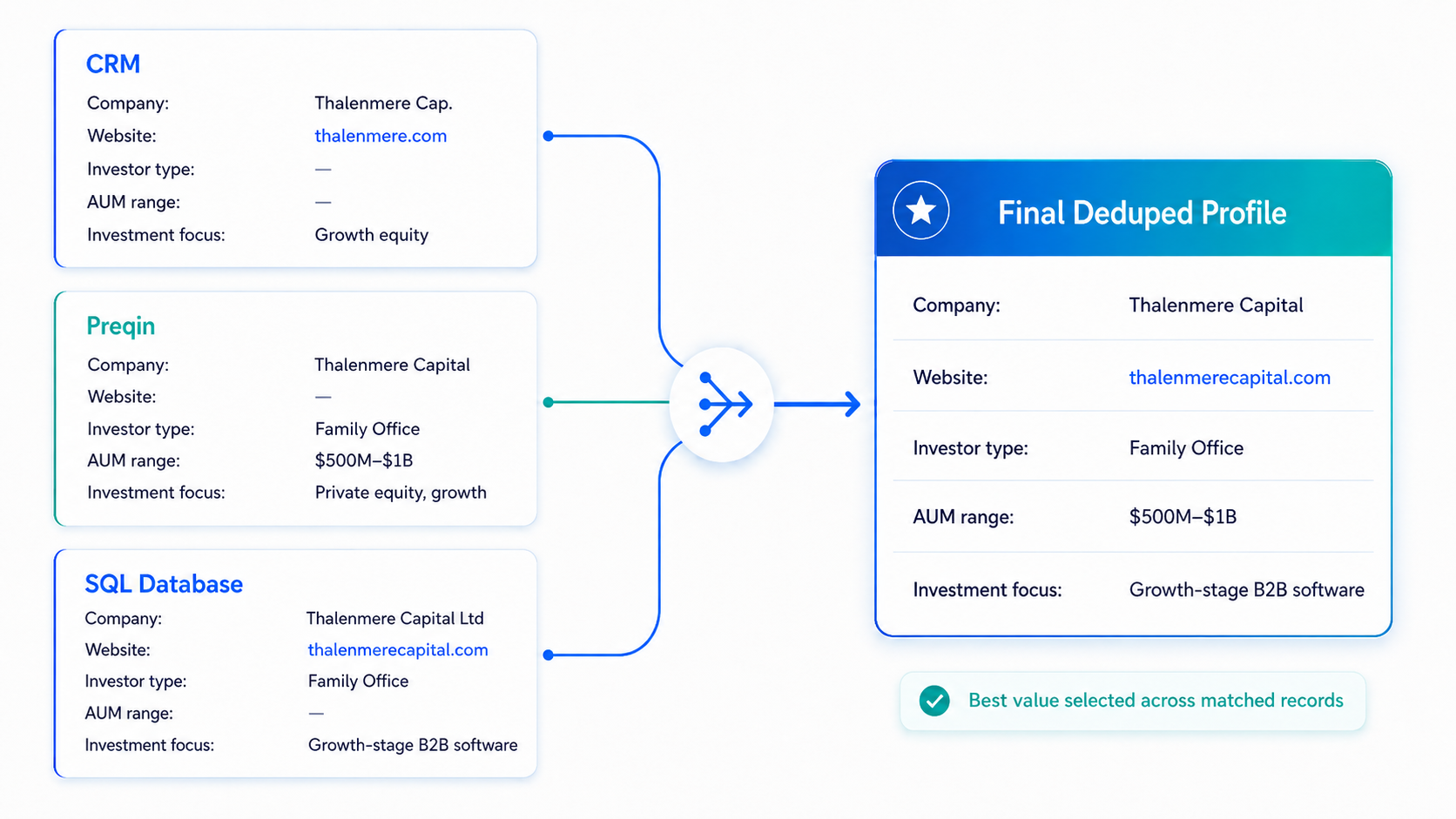
Our platform helps connect these sources into a more reliable investor view by identifying overlapping entities, duplicate records, conflicting information, and missing links between systems.

Investor records deduplicated across CRM, Preqin, and SQL database sources

Typical outputs

  • Matched investor entities across sources
  • Duplicate and conflict detection
  • Cleaner CRM/account structures
  • Source-level traceability where needed

2. Improve investor data quality

Even with market data providers, investor records often contain gaps, stale fields, inconsistent classifications, and conflicting values.

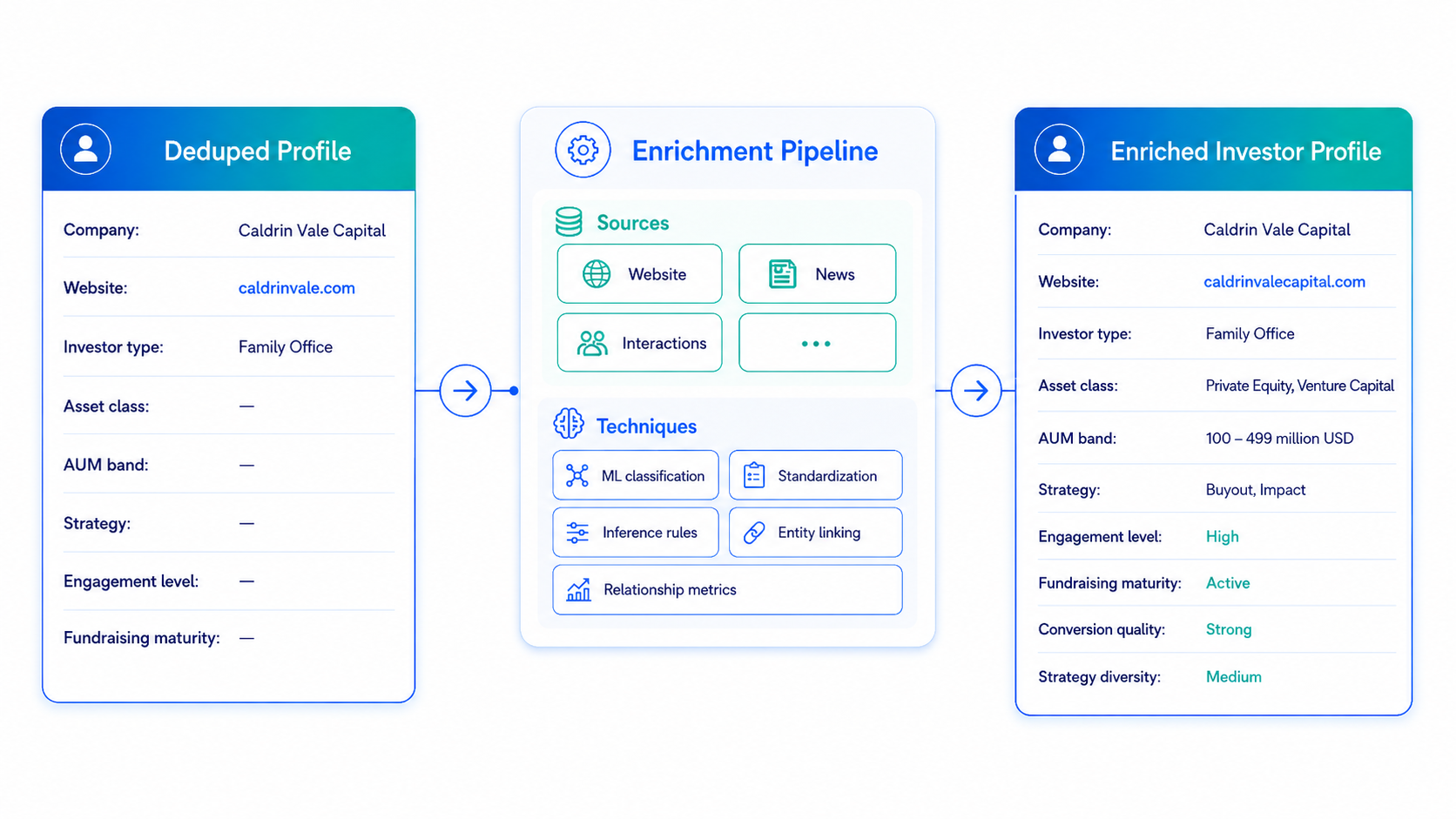
AltF2 uses ML-powered enrichment and data quality pipelines to improve investor profiles, standardize key fields, classify records, and make the data more usable for reporting, segmentation, and downstream models.

Investor profile enrichment pipeline from deduped profile to enriched investor profile

Typical outputs

  • Enriched investor profiles
  • Standardized classifications
  • Missing-field improvement
  • Data quality reports
  • Cleaner fields for reporting and scoring

3. Prioritize better-fit investors

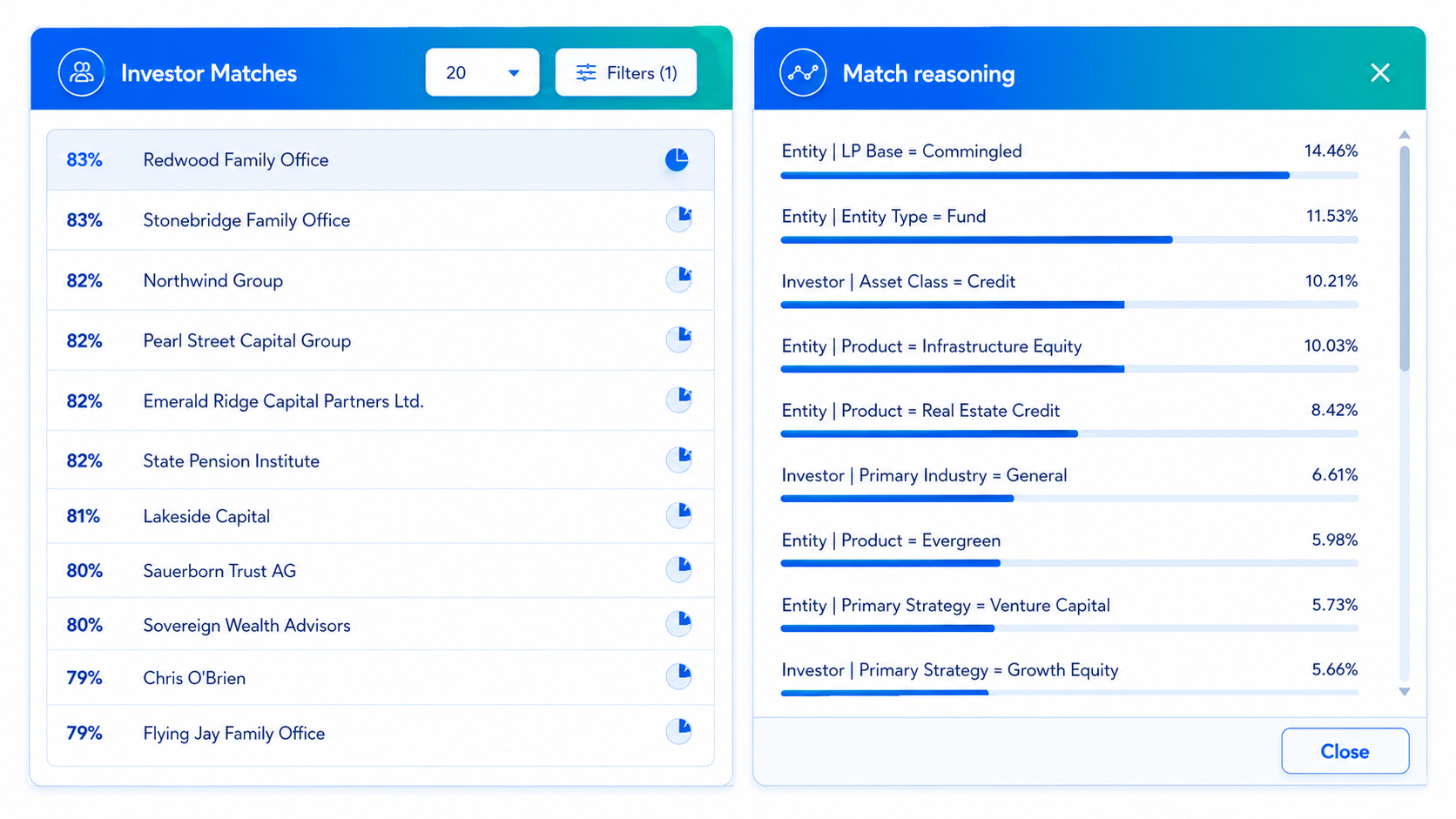
The platform can score which investors are more likely to fit a specific fund, product, or strategy.

Instead of only building broad target lists, the scoring layer uses investor attributes, CRM history, interaction data, fundraising context, and enrichment signals to help teams prioritize where to focus.

Investor product fit scoring and ranked investor shortlists

Typical outputs

  • Ranked investor lists
  • Investor/product fit scores
  • Campaign shortlists
  • CRM widgets
  • API scores
  • Reports for review and outreach planning

4. Give teams useful relationship context

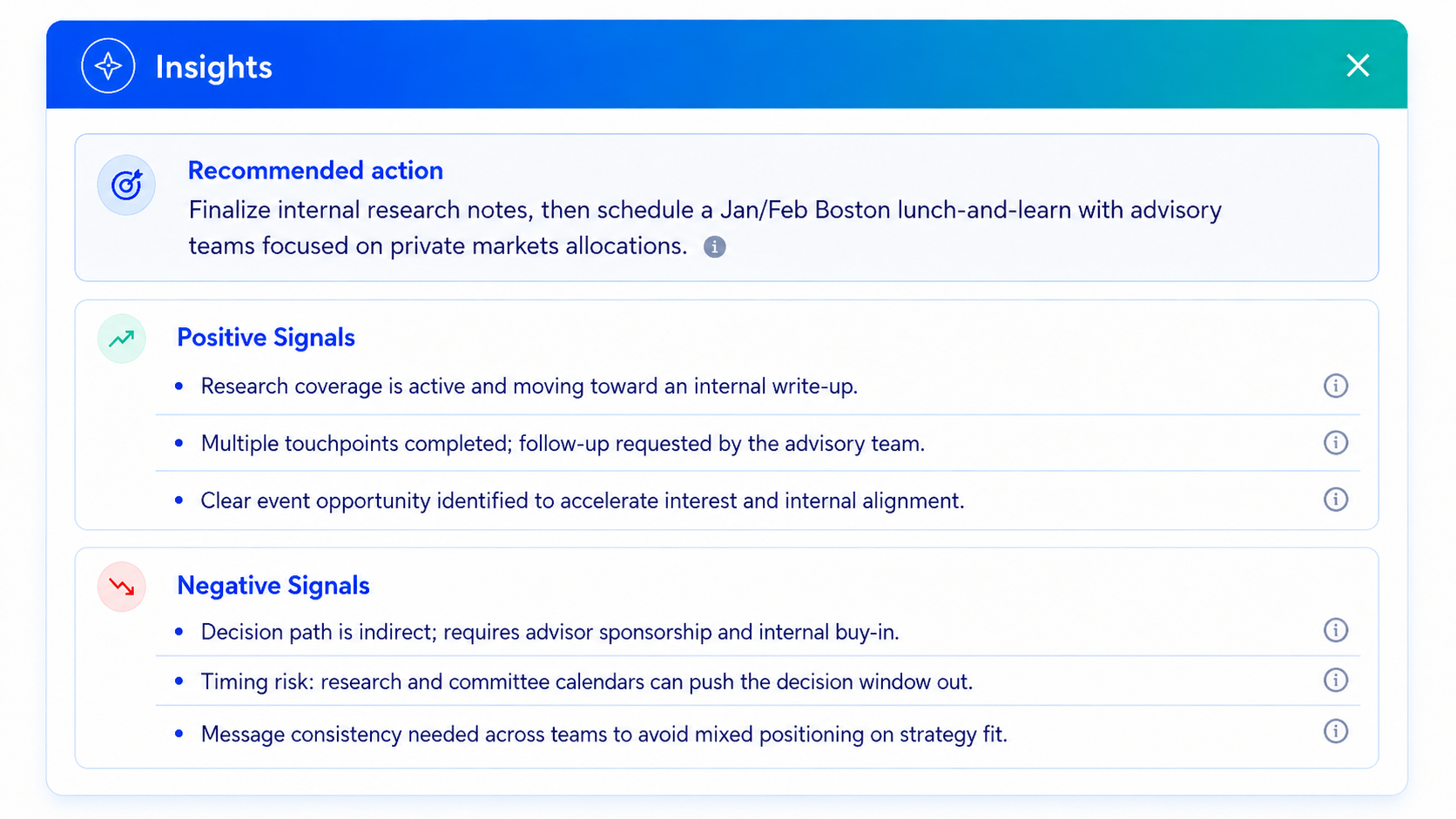
Investor data is not only about firmographics. Useful context often sits in notes, meetings, emails, CRM activity, and past outreach.

LLM workflows can generate concise summaries, next actions, relationship context, risks, and talking points so teams can prepare faster and act with more relevant information.

Investor relationship context and outreach preparation insights

Typical outputs

  • Investor summaries
  • Next actions
  • Relationship context
  • Account-level insights
  • Outreach preparation notes
  • Decision support for IR and fundraising teams

5. Use support hours where they matter

The platform is delivered with a defined block of hands-on support hours.

These hours can be used for tool implementation and tuning, but also for broader data work such as cleanup, pipeline design, reporting, analysis, validation, troubleshooting, and advisory support around the client's data ecosystem.

Implementation support

Configure tools, integrations, access, and initial workflows.

Data cleanup

Resolve messy fields, duplicates, gaps, and inconsistent records.

Pipeline design

Plan repeatable ETL, API, database, and CRM data flows.

Report design

Shape dashboards and reports around operational decisions.

Analysis and validation

Review coverage, quality, assumptions, and output reliability.

Model/output review

Inspect scoring, summaries, match reasons, and edge cases.

Ongoing tuning

Adjust fields, thresholds, prompts, reports, and workflows.

Data consulting

Use the hours for broader advice around your data ecosystem.

6. Embed into your existing ecosystem

The platform is not intended to become another isolated system.

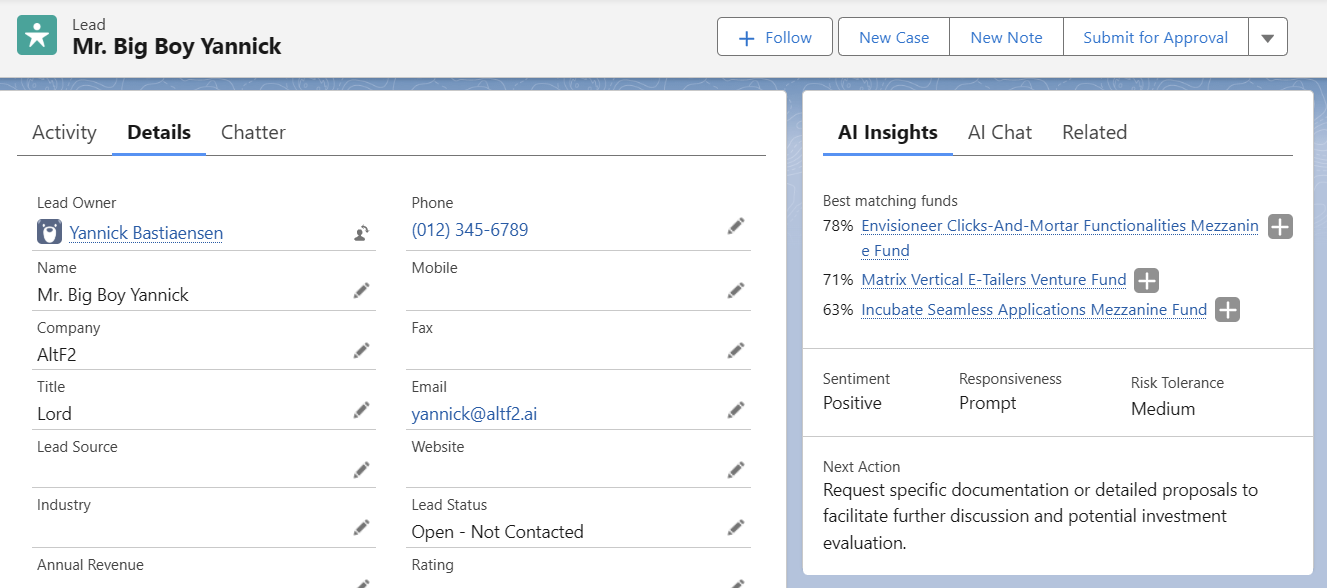
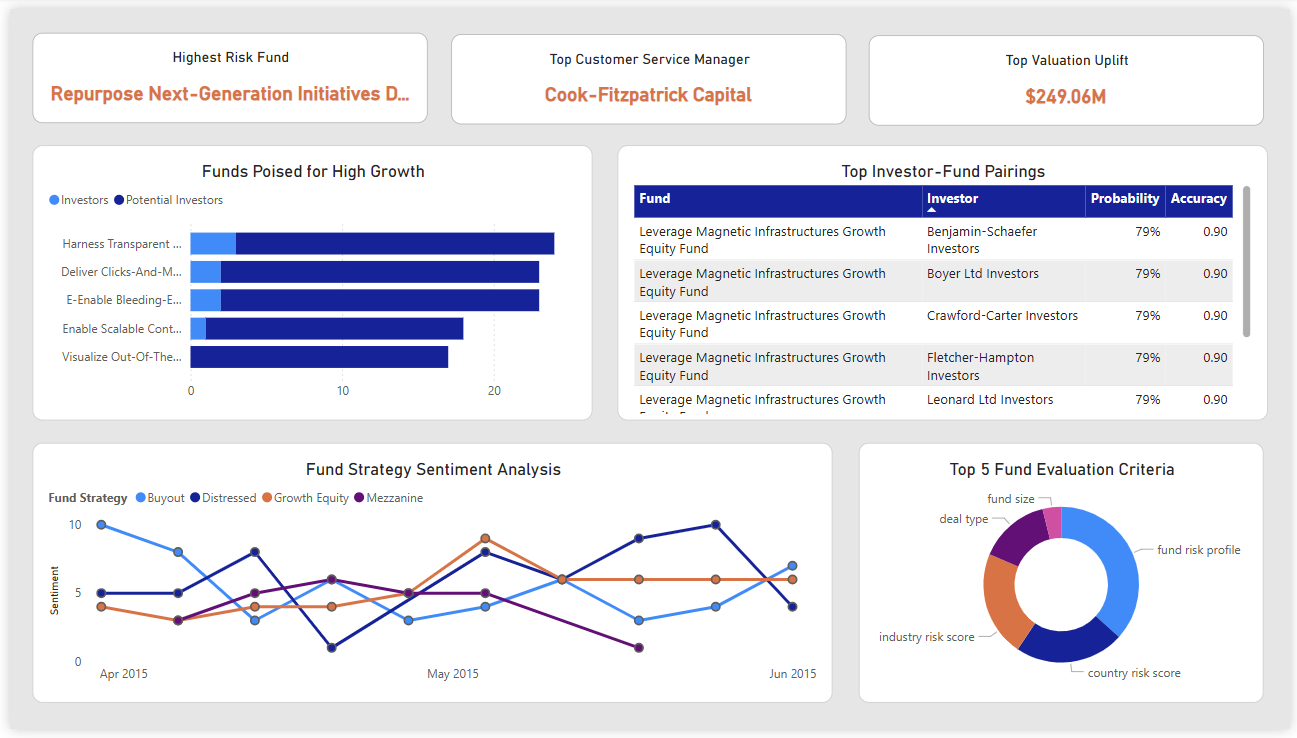
Outputs can be delivered through the tools your team already uses, including CRM extensions, ETLs, APIs, reports, dashboards, databases, alerts, and internal workflows.

Salesforce CRM extension
Power BI dashboard

Typical delivery formats

  • Salesforce or HubSpot extensions
  • APIs
  • ETL outputs
  • BI dashboards
  • Reports
  • Data quality files
  • Alerts and notifications
  • Internal workflow integrations

Want to Learn More?

Ready to turn fragmented data into investor intelligence?

Talk to us about deploying the platform inside your current data environment.